
Choosing the right benchtop for modern Australian homes.
Selecting a kitchen benchtop is one of the most important decisions in any renovation or new build. Beyond aesthetics, the material you choose impacts durability, daily maintenance, cooking experience, and long-term safety—especially in Australia, where the Engineered Quartz Ban (July 2024) has reshaped the market.
This guide explains the most common materials available today and highlights safe, modern alternatives such as Ultracera Bio-Terra Claystone, designed specifically for the future of Australian benchtops.
1. Marble — Beautiful but High Maintenance
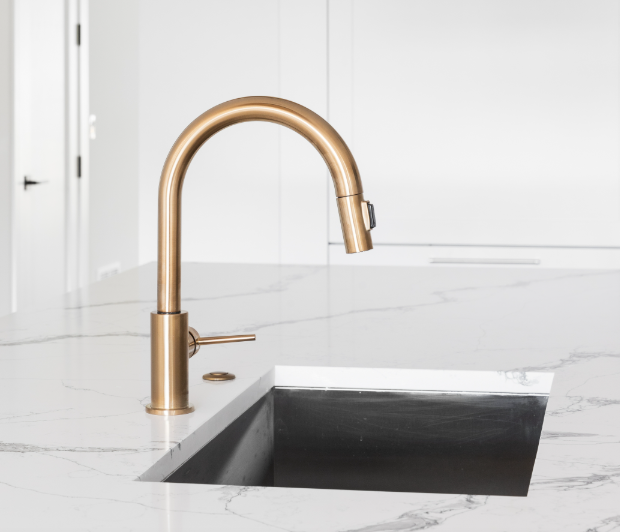
Marble remains a favourite for its timeless elegance and luxurious veining.
Pros
• Natural, unique patterns
• Prestigious, classic appeal
Cons
• Porous and easily stained
• Etches with acids (lemon, vinegar, wine)
• Requires sealing every 6 months
• Scratches more easily
Best for: Homeowners seeking beauty above practicality.
2. Granite — Strong Natural Stone with Lower Maintenance
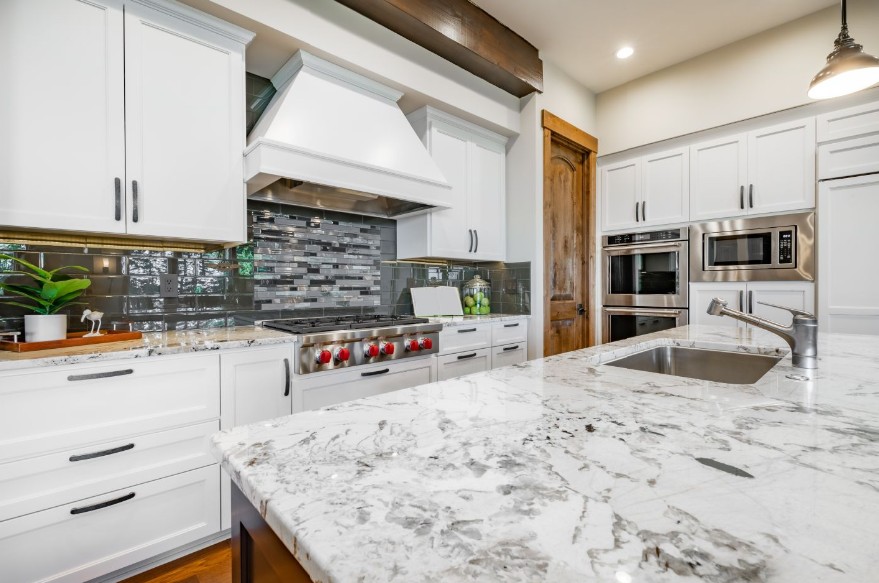
Granite offers durability while retaining the authenticity of natural stone.
Pros
• Highly heat-resistant
• Scratch-resistant
• Sealing only once per year
Cons
• Colour tones can look traditional
• Some porosity remains
Best for: Homeowners who want natural stone without the delicate upkeep of marble.
3.Quartzite — The Best of Both Worlds
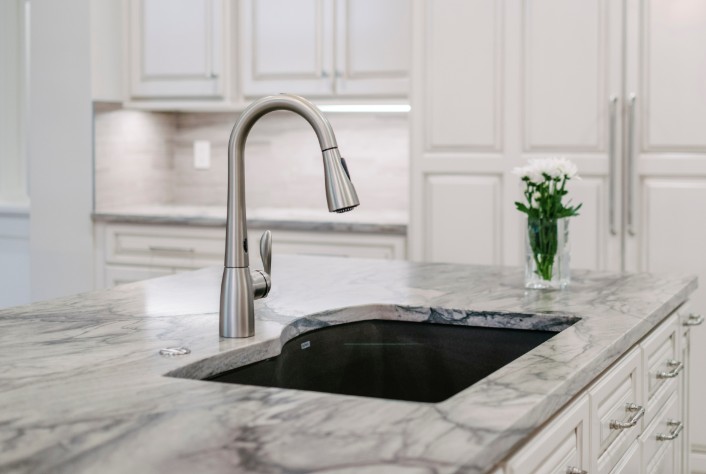
Quartzite brings the beauty of marble together with the resilience of granite.
Pros
• Elegant, soft veining
• Harder and more durable than most natural stones
• Less prone to etching and staining
Cons
• Requires periodic sealing
• Higher pricing in Australia
Best for: Those wanting a premium natural stone look with more durability.
4. Porcelain / Sintered Stone — High Performance, Modern Style
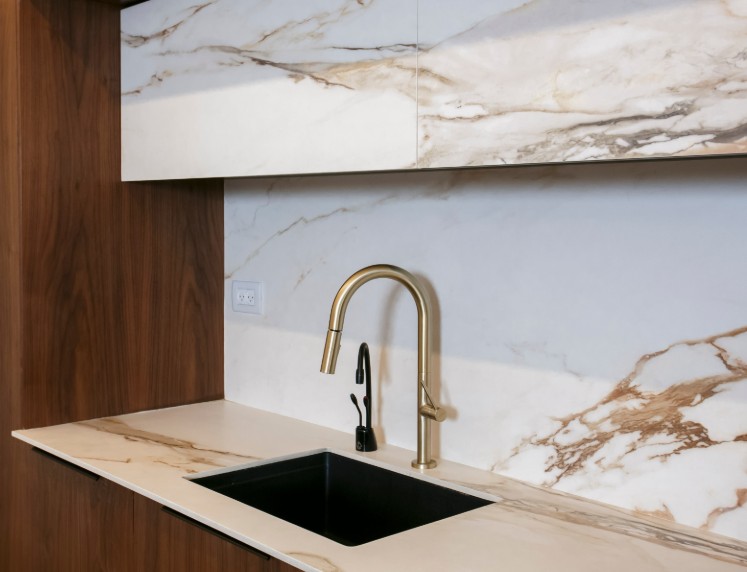
Porcelain benchtops have become mainstream in Australia for their strong performance.
Pros
• Extremely scratch-resistant
• <0.5% absorption rate (highly non-porous)
• Excellent stain and heat resistance
• Large slab formats
Cons
• Brittle edges can chip if heavy objects fall
• Pattern is often surface-printed (less repairable)
• Requires highly skilled fabrication
Best for: Busy households wanting ultra-low maintenance surfaces.
5. Engineered Stone (Quartz) — Banned in Australia
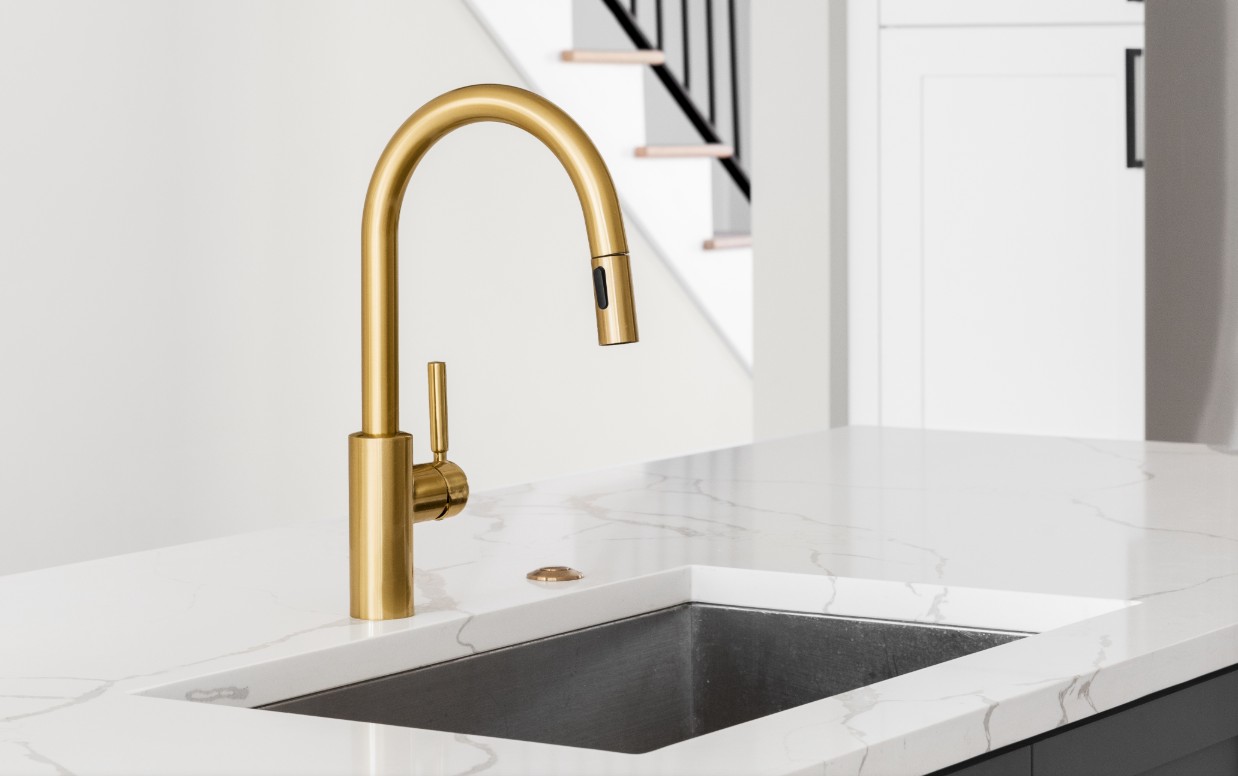
Engineered quartz was once Australia’s most popular benchtop, but due to rising silicosis cases, it is now banned nationwide.
Status in Australia:
❌ Banned from manufacturing, importing, supplying, and installation (from July 2024)
Risk:
• Contains high crystalline silica
• Fabrication produces hazardous silica dust
Available alternatives:
• Ultracera Bio-Terra Claystone
• Porcelain / Sintered Stone
• Granite / Quartzite
5. Ultracera Bio-Terra Claystone — The Next Generation Benchtop for Australia
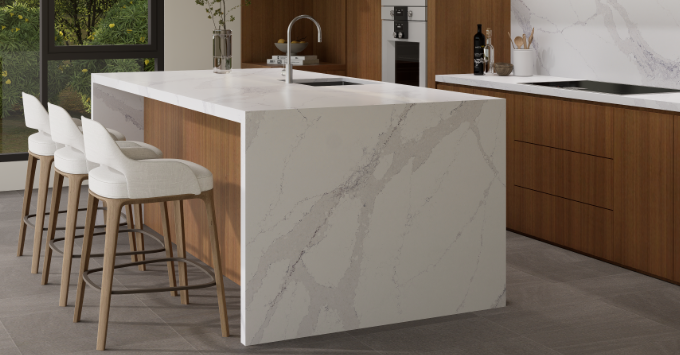
Designed with the future of the Australian market in mind, Ultracera offers a premium, safer, and low-maintenance alternative to traditional engineered surfaces.
Pros
• <1% crystalline silica,safe for fabricators and compliant for the post-Quartz Ban market
• Non-porous surface
• Highly resistant to stains and daily spills
• Strong impact resistance (less brittle than porcelain)
• Through-body veining for more seamless repairs
• Warm, natural stone-like feel
• Ideal for both kitchens and wet areas
Cons
• Higher investment than entry-level materials
• Some patterns are more uniform (depending on design preference)
Best for: Australian families wanting a beautiful, safe, modern, and low-maintenance benchtop solution.
How to Choose the Right Benchtop (for Australian Conditions)
✔ You cook often and want absolute practicality
Choose: Ultracera or Porcelain
✔ You want beautiful veining without the upkeep of marble
Choose: Ultracera Calacatta Series or Quartzite
✔ You want the safest material after the Australian Quartz Ban
Choose: Ultracera (zero silica)
Avoid: Engineered Stone
✔ You prefer natural stone
Choose: Granite or Quartzite